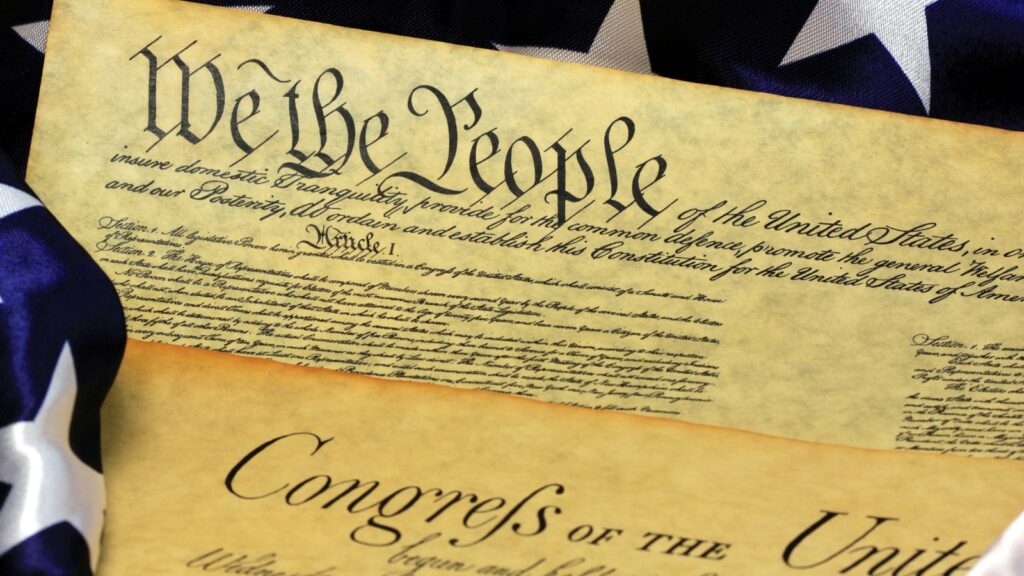
A recent article reported that most college students believe that offensive speech is not protected by the Constitution. Of those surveyed, 44% answered that offensive speech is not protected while 39% answered correctly that the Constitution protects offensive speech. I guess the other 17% didn’t know, which is almost as bad. 62% agreed that campus groups hosting an event are legally required to supply a speaker with the opposite view point. Huh?
It is beyond scary to me the lack of understanding of our Constitution that young people have. I suspect that older generations have a marginally better understanding, but suspect that much of the citizens of our great country don’t understand the bedrock document of our nation. I believe we have a duty to teach the Constitution to others.
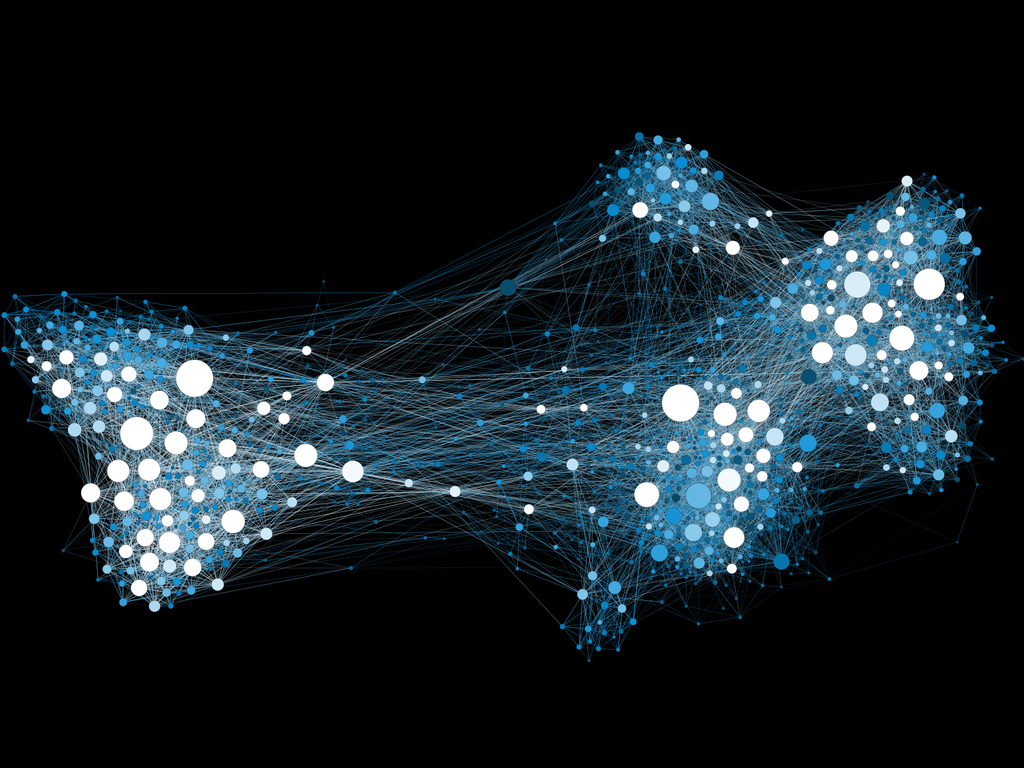
I’ve often wondered about the effects of social media use. My roles as a technology manager, professor, observer of human behavior, and parent put the topic of social media squarely in my sights. I recently read an excellent article from the BBC on the effects of social media use, and while it was not scholarly, it summarizes much of the current research.
Does Twitter cause anxiety or let us cope with it better? Do people’s moods increase or decrease after using social media? Does use of social media cause depression? It’s interesting because much of the scholarly research is inconclusive and contradictory. While I haven’t gone to the source articles (yet), I’m curious why we don’t have a solid base of literature on this topic considering the massive amount of time the billions of our people spend on it. Is our lack of curiosity because we are afraid of the answer?
I walk across campus and have to dodge students who have their noses in their devices as they walk. Virtually ALL of them are engrossed in the latest tweet or Facebook posts from their friends. I wonder what this behavior, which appears to be an addiction, is doing to their young minds. My experience is that most of what is published on social media is banal minutiae, which creates another question – WHY?
Microsoft developed some tools to analyze Twitter profiles for depressive language, linguistic style, engagement and emotion and were able to predict depression prior to symptoms in seven out of ten cases. That’s pretty good if true. After I finish my dissertation this semester, this may be a topic that I would like to pick up and study further. There may be some interesting ways to collect data on this topic using “apps.” Hmm.
Well, the netherworld must be cold today, because I found something on which I agree with the French. This article about banning supermarkets from throwing away food is a wonderful idea and a great use of legislation to help combat hunger, not only in our country, but worldwide.

According to the article, France, which receives top marks for food sustainability, throws away 234 pounds of food per capita per year while the U.S. almost doubles that at 430 pounds per capita per year. Worldwide, we throw away one-third of all food produced. ONE-THIRD!!! How is it that we haven’t addressed this issue?
Certainly, I agree that some food that could be dangerous because of spoilage should not be shared or distributed. But I suspect that’s not the case for a majority of the food tossed. There is a difference between expired and dangerous. I wonder if it’s possible to create legislation that is simple, and could distinguish between them?
Want to do something nice for the community where it costs you nothing and takes only a few seconds? The College Station Noon Lions Club is supporting the Fun for All Play Ground in Central Park in College Station (http://funforallplaygroundbcs.com/). The Fun for All park is playground specially designed for people of all abilities to enjoy playing outdoors. It has to be one of the nicest, best ideas I have come across in a long time.
Guaranty Bank is running a contest to support charities across Texas. The project that gets the most votes gets the most support. So far, the Fun for All Park is leading in votes but we need your vote. So click the link below and vote for the Fun for All Park. You can vote once per day!
Here we go again! As usual, The Times is overplaying the point.
“In the lawsuit, filed by the state of Pennsylvania, the judge said the rule would cause irreparable harm because tens of thousands of women would lose contraceptive coverage.”
Within the context of this article, “losing contraceptive coverage” doesn’t mean women wouldn’t have access to it. Rather it means they must pay for it themselves instead of having other citizens pay for it. How much are we talking about? In my health plan, the prescription co-pay (after deductible) would be $15 for three months. For Medicaid recipients, there is no deductible, and the co-pay is $4. Putting aside the reasonableness of all of our citizens being responsible for their own medication, do these amounts of money sound like they would cause “irreparable harm to tens of thousands of women?”
95% of US Citizens have mobile phones and pay at least $30/month for service. If contraception is as critical as the media portrays, and losing free contraception would cause “irreparable harm,” dare I suggest it would be reasonable for those who can’t afford contraception to give up their mobile service in order to pay for it? What it sounds like is The Times is making an argument citizens have a right to free contraception. I’m pretty sure that’s not in The Constitution.
“It is difficult to imagine a rule that ‘intrudes more into the lives of women.’”
Huh? Expecting citizens to pay for their healthcare is intruding into their lives? I don’t want to intrude on anyone’s life. But it’s OK for them to reach into my pocket to pay for something I find morally wrong? That sounds like the intrusion is on the other foot.
Well, they did it! The FCC will now allow Internet service providers to provide differential service based upon content. The reason this is bad is because service should be neutral in relation to content. Think of our First Amendment free-speech rights. Places of public accommodation are not allowed to discriminate against any type of speech on the basis of the content of that speech. As a college administrator, I can’t say to a student or group, “I like the content of what you’re saying, so you get to have this particular space on campus.” This discrimination based upon content is what net neutrality was protecting against. Frankly, I think it’s just another way for the Internet service providers to make money, at the expense of free speech.
Republicans may have ‘awoken a sleeping giant’ by repealing net neutrality
I’m sitting in the public library of Hot Springs, NC, writing this blog entry and contemplating the magnitude of what we all just did. Not because it was a feat of athletic ability, or extreme endurance, or any such example of human exceptionalism. No, rather it was, as it always is, a magnum of human blessings, a bouquet of love and kindness, and a vision of God’s beautiful creation that never fails to stir my heart to tears of gratitude.
It would be impossible to encompass the entire experience in this blog post, and so I won’t try. Rather, I’d like to describe the crew, the trek, and why it was so special. Our crew this year consisted of 16 people, most related by blood, all related in spirit. We had the six Sweeneys (minus our eldest who is currently in Haiti on internship), three Boyds (our patron member, Walker, at 88 years of age, and his two sons, Tim and Austin), father and daughter Katkoskis, three young friends of the families, and Terri, our live-in librarian.
Trail magic was in abundance this year. I found great blessings in watching the Boyd brothers shepherd their father over 61 miles of sometimes treacherous trail, minister to him when he stumbled, and recount memories of their protean steps over this same ground 46 years ago, almost to the day. My heart ached as my MC, turning eight years old on the trail this year, broke out in a refrain of Dona Nobis Pachem as we maneuvered precariously over a knife-edge ridge with stunning views of smokey peaks after a day of heavy fog which shrouded God’s mystery. I was even thankful when a bear decided to walk under my hammock (and not eat me) at two in the morning, though he did manage to take my shirt for a short stroll.
Most of you know that I’m a Boy Scout leader. Part of my current job is to teach young scouts about citizenship as a merit badge counselor for Citizenship in the Community/Nation/World. These are three eagle-required badges that are frankly, in my opinion, the best and most important badges scouts earn. Here’s requirement #1 for CitNation:
Explain what citizenship in the nation means and what it takes to be a good citizen of this country. Discuss the rights, duties, and obligations of a responsible and active American citizen.
The first question I ask is, “What is the most important duty of a responsible and active American citizen?” They invariably answer, “Voting!” to which I answer, “NO! The most important duty of a citizen is to be informed!” After they give me puzzled looks, I then talk about the media. I tell them that they must consume multiple sources of media on both sides of the political spectrum because today all media is agenda driven. While you can argue that the overall objective of media is to make money (at least in this country), in so doing, media target a demographic of reader/listener/watcher and then create an agenda within that bubble.
No more clearly is this demonstrated than at National Public Radio. I’ve been listening to NPR since my college days. Over the arc of that 30 years, I’ve been conscious of a sea change in their agenda (i.e., marketing strategy). Today, NPR is perhaps the most overtly liberal “news organization” in the world. That’s OK, because I can balance out NPR with other, more conservative news sources such as Fox News, which is just as agenda driven as NPR.
But since the election, NPR has literally lost its mind. Virtually every story is about Trump and is negative. For example, on December 13, 2016, there were 19 stories during All Things Considered. Of the 19, 15 of them were either explicitly about Trump, or were topics where Trump was openly criticized for his views or criticized by association (e.g., Columbia Journalism Report Criticizes Exxon CEO’s Position On Climate Change). All of them were negative.
Of course, part of NPR’s hubris is their inconsolable grief over Hillary’s loss. No more clearly is this illustrated than in their focus on the 2.8 million popular votes by which Hillary “won.” (See CNN for an example of this.) Newsflash: Hillary didn’t win by 2.8 million, she lost by 74. The sweet irony of this story is the fact that there turned out to be more faithless electors voting for Trump than Hillary. Oops! I guess THAT strategy backfired! NPR’s focus on the popular vote in an effort to sway the ignorant electorate is disingenuous for an organization that considers itself an elite news organization – clearly manipulation.
I didn’t vote for Trump (I didn’t vote for Hillary, either). I think he’s a dangerous choice for the most powerful job in the world. He’s vain, thin-skinned, self-absorbed, pompous, imprudent, inexperienced, pandering, and self-righteously indignant. But I must admit that NPR’s rabid coverage of his transition plans have been so over the top that I’ve come to even defend him in certain circumstances. If NPR thinks he’s so bad that they are willing to completely sell their soul to the liberal left, I may be able to bring myself to support Trump, or at least to give him a chance. So, thank you NPR, for helping me get over my misgivings.